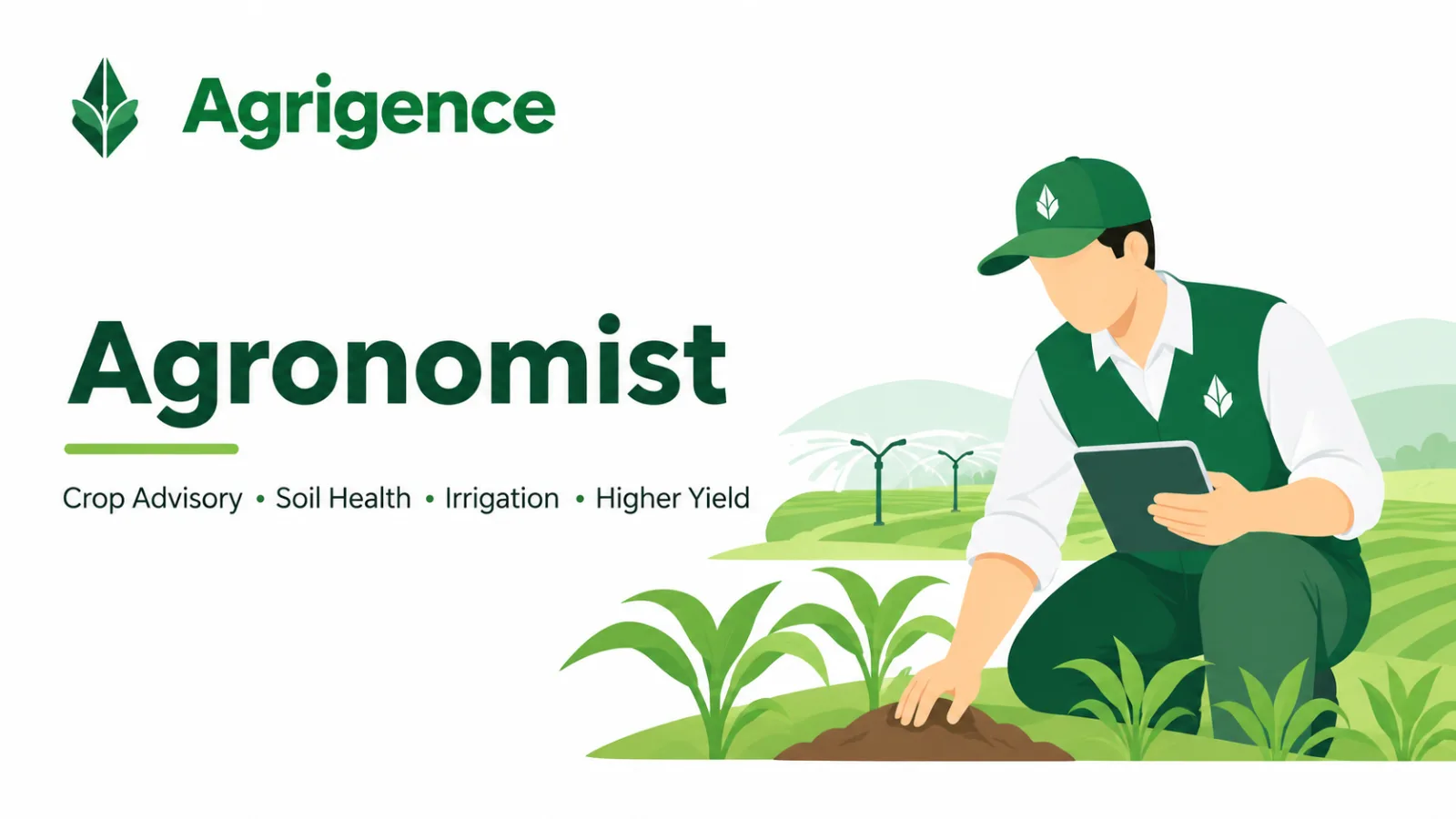
An Agronomist is an agricultural science professional who specialises in crop production, soil management, irrigation, nutrient management and sustainable farming systems. Agronomists help farmers, commercial farms, agricultural companies and research institutions improve crop productivity, resource-use efficiency and agricultural profitability.
Agronomy is one of the most important career fields for Agriculture graduates in India. Agronomists work with seed companies, fertiliser manufacturers, crop protection companies, agricultural technology organisations, commercial farms, food production companies and agricultural research institutions.
Companies such as Bayer, Syngenta, UPL, Corteva, Mahindra Agri Business and other agribusiness organisations recruit agricultural professionals for agronomy, crop advisory, technical services, field research and product development positions.
Official Links & Direct Resources
Candidates with B.Sc. Agriculture can enter entry-level agronomy positions, while M.Sc. Agronomy graduates can pursue specialised technical, research, consultancy and managerial opportunities.
Unlike government recruitment examinations, Agronomist is not a single centrally recruited post. Recruitment is conducted independently by companies, agricultural universities, research institutions and other organisations.
Agronomist Career in India 2026: Overview
| Particulars | Details |
|---|---|
| Career Name | Agronomist |
| Industry | Agriculture and Agribusiness |
| Job Type | Private Sector / Research / Consultancy / Government Projects |
| Core Specialisation | Agronomy and Crop Production |
| Educational Qualification | B.Sc. Agriculture / Relevant Degree |
| Preferred Higher Qualification | M.Sc. Agronomy |
| Research Qualification | Ph.D. in Agronomy or Related Discipline |
| Experience | Fresher to Experienced Professionals |
| Selection Process | Application, Technical Assessment and Interview |
| Job Locations | Across India |
| Salary | Employer and experience dependent |
| Major Recruiters | Bayer, Syngenta, UPL, Corteva and Mahindra |
| Career Growth | Agronomy Executive to Chief Agronomist |
| Recruitment Mode | Organisation-wise Recruitment |
What is Agronomy?
Agronomy is a branch of agricultural science concerned with crop production, soil management, water management and the efficient use of agricultural resources.
It combines knowledge from soil science, plant physiology, crop genetics, agricultural meteorology, agricultural engineering and agricultural economics.
The primary objective of agronomy is to improve agricultural production while maintaining soil health and environmental sustainability.
Major Areas of Agronomy
- Crop production and management.
- Soil fertility and nutrient management.
- Irrigation and water management.
- Cropping systems and crop rotation.
- Weed management.
- Integrated farming systems.
- Dryland agriculture.
- Conservation agriculture.
- Organic and natural farming.
- Climate-resilient agriculture.
- Precision agriculture.
- Agricultural resource management.
- Sustainable crop production.
Agronomist Job Profile and Responsibilities
Agronomists work in commercial farms, agricultural companies, research organisations and agricultural consultancy firms.
Their responsibilities vary according to the employer and specialisation.
1. Crop Production Management
- Planning seasonal crop production.
- Selecting suitable crop varieties.
- Recommending sowing dates.
- Developing crop production schedules.
- Monitoring crop growth.
- Improving crop productivity.
- Evaluating cropping systems.
- Recommending appropriate cultivation practices.
2. Soil and Nutrient Management
- Assessing soil fertility.
- Collecting and interpreting soil samples.
- Preparing fertiliser recommendations.
- Developing integrated nutrient management plans.
- Monitoring soil health.
- Identifying nutrient deficiencies.
- Recommending organic manures and biofertilisers.
- Improving nutrient-use efficiency.
3. Irrigation and Water Management
- Planning irrigation schedules.
- Recommending appropriate irrigation methods.
- Monitoring crop water requirements.
- Improving water-use efficiency.
- Supporting drip and sprinkler irrigation.
- Monitoring soil moisture.
- Developing water conservation strategies.
- Managing irrigation-related crop stress.
4. Crop Protection and Weed Management
- Identifying common crop pests and diseases.
- Recommending appropriate crop protection practices.
- Developing integrated pest management strategies.
- Monitoring weed populations.
- Supporting biological control methods.
- Advising on pesticide application.
- Evaluating crop protection technologies.
5. Agricultural Research and Field Trials
- Conducting crop field experiments.
- Designing agronomic research trials.
- Evaluating crop varieties.
- Comparing fertiliser treatments.
- Studying irrigation responses.
- Collecting experimental data.
- Analysing crop yield results.
- Preparing scientific reports.
6. Precision Agriculture and Digital Farming
- Using GPS-based field mapping.
- Monitoring crop development.
- Applying remote sensing technologies.
- Evaluating drone-based agricultural applications.
- Using soil moisture sensors.
- Supporting variable-rate fertiliser application.
- Monitoring crop health through digital platforms.
- Developing data-driven crop management recommendations.
7. Farmer Advisory and Technical Support
- Visiting commercial farms.
- Providing scientific crop recommendations.
- Conducting farmer training programmes.
- Organising field demonstrations.
- Supporting agricultural extension activities.
- Preparing crop advisory reports.
- Helping farmers improve production practices.
Types of Agronomist Jobs in India
Agronomy professionals can work in several specialised positions depending on their educational qualifications and experience.
| Job Position | Major Responsibilities |
|---|---|
| Field Agronomist | Crop monitoring and farm-level recommendations |
| Research Agronomist | Agricultural experiments and scientific research |
| Commercial Farm Agronomist | Crop planning and production management |
| Soil Agronomist | Soil fertility and nutrient management |
| Irrigation Agronomist | Irrigation scheduling and water management |
| Precision Agriculture Agronomist | Digital farming and sensor-based crop monitoring |
| Technical Agronomist | Technical support for agricultural products |
| Seed Agronomist | Seed evaluation and crop performance |
| Crop Consultant | Scientific agricultural advisory |
| Senior Agronomist | Technical leadership and agronomic planning |
| Chief Agronomist | Management of agronomy teams and research programmes |
Top Companies Hiring Agronomists in India
Several Indian and multinational companies operate in agricultural inputs, seeds, crop protection, agricultural technology and commercial farming.
These organisations offer career opportunities in agronomy, technical services, field research, crop advisory and product management.
1. Bayer Crop Science
Bayer operates in agricultural science, crop protection, seeds and digital farming.
Potential career roles include:
- Agronomist.
- Field Development Officer.
- Technical Services Specialist.
- Crop Solutions Specialist.
- Product Development Executive.
- Field Research Associate.
Official Links:
- Bayer India: https://www.bayer.in/
- Bayer India Careers: https://www.bayer.in/en-in/careers
- Global Job Portal: https://jobs.bayer.com/
2. Syngenta India
Syngenta operates in crop protection, seeds and agricultural innovation.
Potential career opportunities include:
- Field Agronomist.
- Technical Expert.
- Crop Specialist.
- Agronomy Development Executive.
- Seed Production Specialist.
- Field Research Associate.
Official Links:
- Syngenta India: https://www.syngenta.co.in/
- Syngenta India Careers: https://careers.smartrecruiters.com/SyngentaGroup/india
- Global Careers: https://www.syngenta.com/careers
3. UPL Limited
UPL works in crop protection, agricultural inputs, seeds and sustainable agricultural solutions.
Potential career opportunities include:
- Agronomy Specialist.
- Technical Sales Executive.
- Crop Protection Specialist.
- Product Development Executive.
- Agricultural Field Officer.
Official Website: https://www.upl-ltd.com/
4. Corteva Agriscience
Corteva operates in seed technology, crop protection and agricultural innovation.
Potential career opportunities include:
- Agronomy Research Associate.
- Field Research Specialist.
- Technical Agronomist.
- Crop Protection Specialist.
- Seed Production Specialist.
Official Careers: https://apply.corteva.com/careers
5. Mahindra Agri Business
Mahindra Agri Business operates in seeds, crop care, horticulture, irrigation and agricultural solutions.
Potential career opportunities include:
- Agronomist.
- Field Technical Officer.
- Crop Advisory Specialist.
- Product Development Executive.
- Agricultural Business Executive.
Official Links:
- Mahindra Agri Business: https://www.mahindraagri.com/
- Careers: https://www.mahindraagri.com/careers
- Mahindra Group Careers: https://www.mahindra.com/career
Other Agribusiness Employers
| Company | Major Business Area |
|---|---|
| ITC Agri Business | Agricultural sourcing and commodities |
| Cargill | Agriculture, food and animal nutrition |
| Coromandel International | Fertilisers and crop protection |
| BASF India | Agricultural solutions |
| ADAMA India | Crop protection |
| KRIBHCO | Fertilisers and cooperative agriculture |
| DeHaat | Agritech and farmer advisory |
| AgroStar | Agricultural inputs and crop advisory |
| Ninjacart | Agricultural supply chain |
| Arya.ag | Agricultural warehousing and finance |
| TAFE | Agricultural machinery |
| Jain Irrigation | Micro-irrigation and agricultural technology |
The above companies represent potential employers in related agronomy functions. Specific vacancies and job titles depend on company requirements.
Agronomist Eligibility Criteria
Educational qualifications for agronomist positions depend on the employer and job responsibilities.
1. Educational Qualification
| Qualification | Career Opportunities |
|---|---|
| B.Sc. Agriculture | Junior Agronomist, Field Agronomist |
| B.Sc. Horticulture | Horticulture Agronomist, Crop Consultant |
| B.Tech Agricultural Engineering | Irrigation and Precision Agriculture |
| M.Sc. Agronomy | Agronomist, Technical Specialist, Research Associate |
| M.Sc. Soil Science | Soil and Nutrient Management Specialist |
| M.Sc. Horticulture | Horticultural Crop Specialist |
| M.Sc. Agricultural Meteorology | Climate and Crop Advisory |
| Ph.D. Agronomy | Senior Research and Academic Positions |
Is M.Sc. Agronomy Compulsory?
No. M.Sc. Agronomy is not compulsory for every agronomist position.
B.Sc. Agriculture graduates can apply for many entry-level field and advisory positions.
However, an M.Sc. in Agronomy is advantageous for:
- Advanced crop management.
- Research and development.
- Agricultural consultancy.
- Specialist agronomy positions.
- Technical leadership.
- Academic and scientific careers.
Ph.D. qualifications are generally relevant for advanced research and university-level academic positions where required.
2. Important Subjects for Agronomists
Candidates should develop a strong understanding of:
- Principles of Agronomy.
- Field Crop Production.
- Crop Physiology.
- Soil Fertility.
- Nutrient Management.
- Irrigation and Water Management.
- Dryland Agriculture.
- Weed Science.
- Cropping Systems.
- Agricultural Meteorology.
- Integrated Farming Systems.
- Conservation Agriculture.
- Precision Agriculture.
- Organic Farming.
Agronomist Salary in India 2026
Agronomist salaries are not governed by a uniform government pay scale. Compensation depends on educational qualification, experience, company, job location, field responsibilities and technical specialisation.
The following ranges are broad career-planning estimates, not guaranteed salary offers.
| Experience Level | Indicative Annual Salary |
|---|---|
| Fresher / Junior Agronomist | ₹2.5–5 LPA |
| Agronomist (2–5 Years) | ₹4–8 LPA |
| Senior Agronomist | ₹7–12 LPA |
| Technical / Regional Agronomist | ₹8–15 LPA |
| Chief Agronomist / Specialist | ₹12–20+ LPA |
Current salary market information: SalaryExpert's November 2026 employer-survey estimate reports an average gross annual salary of approximately ₹13.13 lakh, with an estimated entry-level figure of ₹9.51 lakh. However, job listings on Indeed show considerably lower salaries for several field agronomy positions. These differences reflect different samples, experience levels and job responsibilities. Candidates should evaluate the actual employment offer rather than rely on a single national average.
Examples of Advertised Agronomist Salaries
Recent Indian job listings have included:
- Field Agronomist positions around ₹15,000–₹40,000 per month.
- Polyhouse Agronomist positions around ₹18,000–₹22,000 per month.
- Some specialist senior polyhouse and hydroponics positions at substantially higher monthly compensation.
These are examples of individual advertised positions, not a standard salary range for all agronomists.
Additional Benefits
Depending on the employer and position, agronomists may receive:
- Travel allowance.
- Fuel reimbursement.
- Field visit allowance.
- Performance incentives.
- Medical insurance.
- Provident Fund.
- Gratuity.
- Accommodation for selected field assignments.
- Training and professional development.
Agronomist Selection Process
Agronomist recruitment is generally organisation-specific. There is no common national examination for all private-sector agronomist jobs.
A typical recruitment process includes:
Stage 1: Online Application
Candidates submit their resume through the company's official career portal.
Stage 2: Resume Shortlisting
Companies evaluate:
- Agriculture qualifications.
- Agronomy specialisation.
- Internship experience.
- Fieldwork experience.
- Technical knowledge.
- Communication skills.
- Previous employment.
Stage 3: Technical Assessment
Some employers may conduct assessments covering:
- Crop production.
- Soil fertility.
- Fertiliser recommendations.
- Irrigation management.
- Pest and weed management.
- Crop yield calculations.
- Field trial analysis.
Stage 4: Technical Interview
Candidates may be asked questions about crop production, agricultural technologies, soil testing, nutrient management, irrigation and field-level problem-solving.
Stage 5: HR Interview
The final interview may cover salary expectations, location, travel requirements, joining availability and employment conditions.
The exact selection process differs between companies.
Important Skills Required for Agronomists
Agronomists need a combination of scientific knowledge, practical field experience and communication skills.
| Skill | Importance |
|---|---|
| Crop Management | Planning and monitoring crop production |
| Soil Testing | Understanding soil fertility |
| Nutrient Management | Preparing fertiliser recommendations |
| Irrigation Management | Optimising water use |
| Crop Protection | Managing pests, diseases and weeds |
| Field Research | Conducting crop experiments |
| Data Analysis | Evaluating field and yield data |
| Communication | Advising farmers and technical teams |
| Problem-Solving | Handling crop production challenges |
| Agricultural Technology | Using modern digital farming tools |
Additional Technical Skills
Candidates can improve their career prospects by learning:
- Microsoft Excel.
- GIS and GPS applications.
- Remote Sensing.
- Drone-based Crop Monitoring.
- Precision Agriculture.
- Soil and Plant Analysis.
- Irrigation Scheduling.
- Crop Modelling.
- Statistical Analysis.
- Agricultural Research Methodology.
- Farm Management Software.
Government and Research Career Opportunities for Agronomists
Agronomists can also pursue public-sector research, teaching and technical career opportunities.
Unlike private-sector hiring, these positions are advertised under specific institutional designations and eligibility rules.
1. ICAR Agricultural Research Service (ARS)
The Agricultural Scientists Recruitment Board (ASRB) conducts the Agricultural Research Service examination for Scientist positions in notified disciplines, including Agronomy.
Candidates generally require a relevant Master's degree in Agronomy or another qualification accepted by the relevant recruitment advertisement.
Official Links:
- ASRB: https://asrb.gov.in/
- Recruitment Notifications: https://asrb.gov.in/vacancy
- ICAR: https://icar.org.in/
2. Agricultural Universities
Agronomists can work in agricultural universities as:
- Assistant Professor.
- Research Associate.
- Senior Research Fellow.
- Junior Research Fellow.
- Project Associate.
- Technical Research Staff.
Eligibility depends on the post, university recruitment rules and relevant NET/Ph.D. requirements.
3. ICAR Research Institutes
Agronomy-related research opportunities are available in ICAR institutes and coordinated research projects working on crop production, soil-water management, cropping systems and sustainable agriculture.
Important research areas include:
- Crop production.
- Conservation agriculture.
- Climate-resilient agriculture.
- Integrated nutrient management.
- Dryland agriculture.
- Water-use efficiency.
- Cropping systems.
Official ICAR: https://icar.org.in/
4. Krishi Vigyan Kendras (KVKs)
KVKs provide opportunities in agricultural technology assessment, demonstration and farmer training.
Professionals may work in agriculture extension, crop advisory, technology demonstrations and specialised subject-matter positions.
Official ICAR Agricultural Extension Division: https://www.icar.gov.in/en/agricultural-extension-division
How to Apply for Agronomist Jobs in India?
Candidates can apply through official company career portals and verified recruitment platforms.
Follow these steps:
- Identify companies working in seeds, fertilisers, crop protection, agricultural technology and commercial farming.
- Visit the official company career website.
- Search for Agronomist, Field Agronomist, Crop Specialist, Technical Agronomist or Agronomy Executive.
- Check educational qualifications and experience requirements.
- Prepare an updated resume highlighting agricultural knowledge and field experience.
- Submit the online application.
- Complete the technical assessment, if prescribed.
- Attend technical and HR interviews.
- Review the employment offer.
- Complete joining formalities.
Candidates should apply only through verified recruitment channels. Legitimate employers should not charge candidates for job offers.
Best Career Preparation Strategy for Agriculture Graduates
A B.Sc. Agriculture graduate interested in agronomy should build a strong foundation in crop science and practical farm management.
Recommended preparation strategy:
- Study the complete Agronomy syllabus.
- Strengthen knowledge of major field crops.
- Learn soil testing and fertiliser recommendations.
- Develop irrigation scheduling skills.
- Learn pest, disease and weed management.
- Participate in agricultural field trials.
- Obtain practical experience on commercial farms.
- Learn Excel and agricultural data analysis.
- Understand modern irrigation and precision farming.
- Improve communication and farmer advisory skills.
Practical field exposure is particularly valuable for commercial farm and field agronomist positions.
Important Courses and Learning Resources
| Institution / Resource | Relevance |
|---|---|
| ICAR | Agricultural research and technical resources |
| Agricultural Universities | B.Sc. and M.Sc. Agronomy |
| MANAGE | Agricultural extension and management training |
| ICAR-IARI | Agronomy and crop science research |
| State Agricultural Universities | Crop production and field research |
| FAO | International crop and sustainable agriculture resources |
Official Links:
- ICAR: https://icar.org.in/
- ICAR-IARI: https://iari.res.in/
- MANAGE: https://www.manage.gov.in/
- Food and Agriculture Organization: https://www.fao.org/
Important Job and Career Links
| Company / Organisation | Official Career Link |
|---|---|
| Bayer India | https://www.bayer.in/en-in/careers |
| Syngenta India | https://careers.smartrecruiters.com/SyngentaGroup/india |
| UPL | https://www.upl-ltd.com/ |
| Corteva Agriscience | https://apply.corteva.com/careers |
| Mahindra Agri Business | https://www.mahindraagri.com/careers |
| ADAMA India | https://www.adama.com/india/en/careers-adama |
| ICAR | https://icar.org.in/ |
| ASRB | https://asrb.gov.in/ |
| Agricultural Universities | https://icar.org.in/ |
These links lead to official company or institutional websites. Actual openings should be checked separately.
Frequently Asked Questions (FAQs)
1. What is an Agronomist?
An Agronomist is an agricultural science professional who specialises in crop production, soil fertility, irrigation, nutrient management and sustainable farming practices.
2. Can B.Sc. Agriculture graduates become Agronomists?
Yes. B.Sc. Agriculture graduates can apply for many entry-level Agronomist, Field Agronomist and Crop Advisory positions.
3. Is M.Sc. Agronomy compulsory for Agronomist jobs?
No. It is not compulsory for all positions. However, M.Sc. Agronomy is advantageous for specialist, research and technical management roles.
4. What is the salary of an Agronomist in India?
Salary depends on employer, qualifications, experience and location. Entry-level field positions can offer relatively modest packages, while specialised and senior positions may offer significantly higher compensation.
5. Which companies hire Agronomists in India?
Bayer, Syngenta, UPL, Corteva, Mahindra Agri Business, ADAMA, Coromandel and agricultural technology organisations are examples of potential employers.
6. Is Agronomist a government job?
Agronomist is a professional designation used across different sectors. Government and public research institutions recruit for related scientific and technical posts under their own eligibility and service rules.
7. What is the difference between Agronomy and Horticulture?
Agronomy primarily focuses on field crop production, soil and water management and cropping systems, whereas Horticulture focuses on fruits, vegetables, flowers, plantation crops and related production technologies.
8. Can M.Sc. Horticulture graduates work as Agronomists?
Yes. They can apply for relevant horticultural crop management, farm advisory and technical positions, depending on the employer's qualification requirements.
9. What are the important subjects for Agronomist careers?
Agronomy, Crop Production, Soil Science, Irrigation Management, Agricultural Meteorology, Weed Science, Crop Physiology and Sustainable Agriculture are important subjects.
10. Is there an entrance examination for Agronomist jobs?
No common national entrance examination exists for private-sector Agronomist jobs. Companies conduct their own recruitment assessments. Public research positions may require separate examinations such as ASRB ARS.
11. Can Agronomists work in commercial farms?
Yes. Commercial farms recruit Agronomists for crop planning, soil management, fertiliser recommendations, irrigation scheduling, crop monitoring and yield improvement.
12. What are the career growth opportunities for Agronomists?
Professionals can progress from Junior Agronomist to Field Agronomist, Senior Agronomist, Technical Manager, Regional Agronomy Manager and Chief Agronomist, depending on experience and performance.
13. Is Agronomy a good career for Agriculture graduates?
Yes. Agronomy offers opportunities in commercial farming, agricultural input companies, research, consultancy, crop advisory, precision agriculture and sustainable agricultural development.
Conclusion
Agronomy is an important agricultural science career for graduates who are interested in crop production, soil health, irrigation, nutrient management and sustainable farming.
Agronomists play a key role in improving agricultural productivity and resource-use efficiency through scientific crop management and practical farm advisory services.
Companies such as Bayer, Syngenta, UPL, Corteva, Mahindra Agri Business and other agricultural organisations offer opportunities in agronomy, technical services, product development, field research and crop advisory.
Candidates with B.Sc. Agriculture can enter through junior and field-level positions, while M.Sc. Agronomy graduates can explore specialised technical, research, consultancy and management roles.
With the growing importance of precision agriculture, climate-resilient farming, soil health management and sustainable crop production, Agronomists have an important role in the future of Indian agriculture.
Official Career Resources:
- ICAR: https://icar.org.in/
- ASRB: https://asrb.gov.in/
- Bayer Careers: https://www.bayer.in/en-in/careers
- Syngenta Careers: https://careers.smartrecruiters.com/SyngentaGroup/india
- Mahindra Agri Careers: https://www.mahindraagri.com/careers
Disclaimer: This article is intended for educational and career-information purposes. Salary ranges are indicative and vary according to company, location, qualification, experience and job responsibilities. Recruitment criteria and vacancies are determined independently by individual employers. Candidates should verify the latest requirements through official career portals before applying.
Last Updated: 18 November 2026