Seed Technologist & Plant Breeder Jobs in India 2026: Eligibility, Salary, Companies, Career Scope & Recruitment
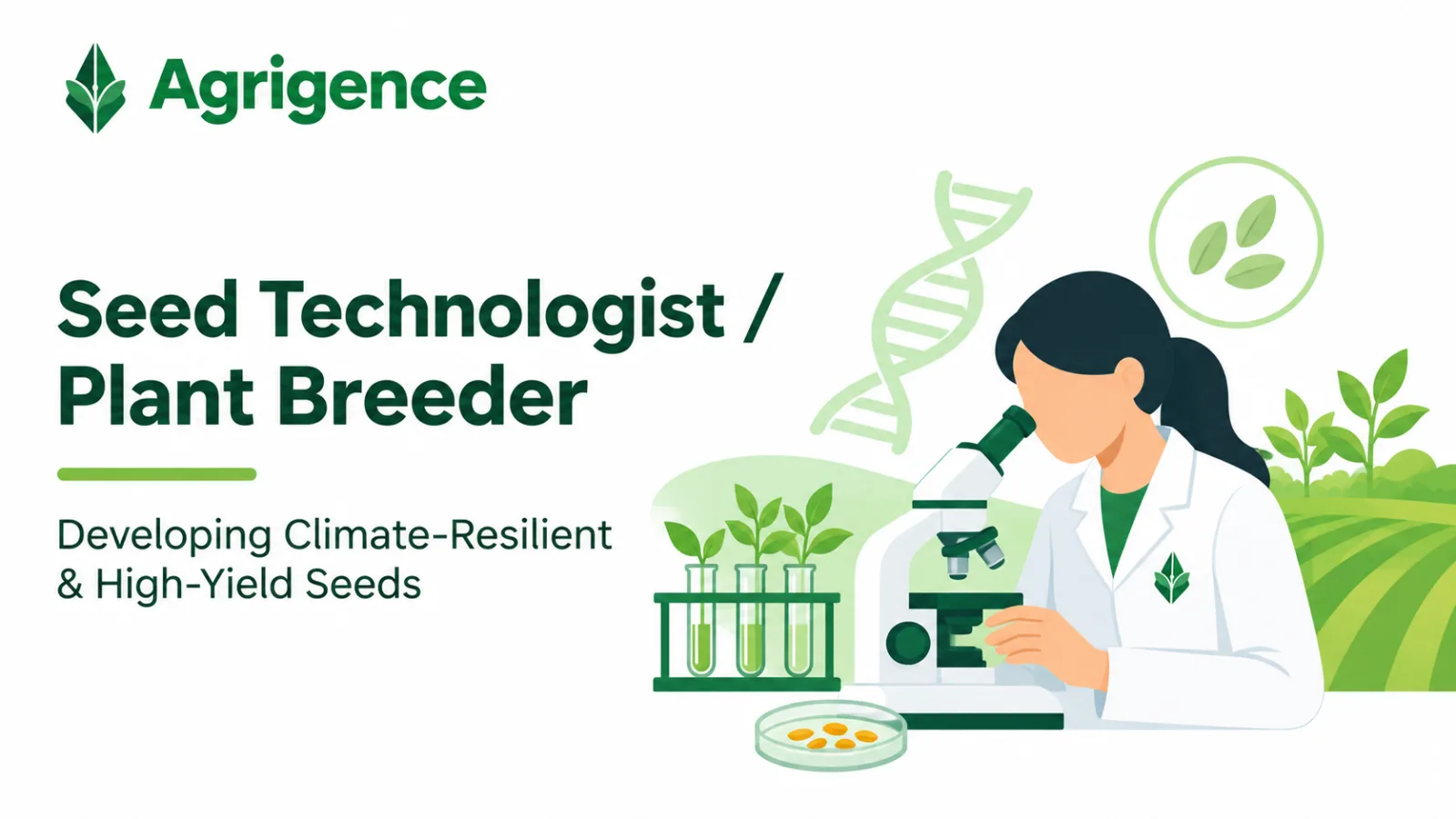
Seed Technologist and Plant Breeder are two important career opportunities in India's agricultural research and seed industry. These professionals play a major role in developing high-quality seeds, improving crop genetics, increasing agricultural productivity and developing climate-resilient crop varieties.
India's seed industry includes private seed companies, agricultural research institutions, government seed corporations, seed certification agencies and biotechnology organisations. Companies such as Syngenta, Bayer, Corteva, Mahyco, Kaveri Seeds, Rasi Seeds and UPL recruit professionals for plant breeding, seed production, research and development, quality control and seed technology.
Candidates with B.Sc. Agriculture, B.Sc. Horticulture, Biotechnology and other relevant agricultural science qualifications can enter different seed-sector positions. Postgraduate degrees in Genetics and Plant Breeding, Seed Science and Technology, Plant Biotechnology and related disciplines provide access to specialised technical and research careers.
Direct Application & Official Recruitment Links
This career offers opportunities in hybrid seed development, genetic improvement, seed production, seed testing, quality assurance, molecular breeding and agricultural biotechnology.
Seed Technologist & Plant Breeder Career 2026: Overview
| Particulars | Details |
|---|---|
| Career Fields | Seed Technology and Plant Breeding |
| Industry | Agriculture and Seed Industry |
| Job Type | Private Sector / Government / Research |
| Major Specialisations | Seed Science, Genetics, Plant Breeding, Biotechnology |
| Basic Qualification | B.Sc. Agriculture / Relevant Science Degree |
| Preferred Qualification | M.Sc. Seed Science & Technology / Genetics & Plant Breeding |
| Advanced Qualification | Ph.D. in Relevant Discipline |
| Major Employers | Syngenta, Bayer, Corteva, Mahyco, Kaveri Seeds |
| Recruitment | Company-wise / Government Recruitment |
| Selection Process | Application, Technical Assessment and Interview |
| Job Location | Across India |
| Salary | Organisation and experience dependent |
| Career Growth | Seed Executive to R&D Manager / Chief Breeder |
| Official Research Authority | ICAR / ASRB |
What is Seed Technology?
Seed Technology is an agricultural science discipline concerned with the production, processing, testing, quality assurance, storage and distribution of seeds.
It ensures that farmers receive seeds with appropriate genetic identity, physical purity, germination capacity, vigour and seed health.
The main objective of seed technology is to maintain seed quality from production to final distribution.
Major Areas of Seed Technology
- Seed production and multiplication.
- Seed processing and grading.
- Seed sampling and testing.
- Seed certification.
- Seed germination testing.
- Seed viability and vigour assessment.
- Seed moisture determination.
- Seed storage and preservation.
- Seed health testing.
- Seed treatment.
- Seed quality control.
- Seed marketing and distribution.
- Seed traceability and regulatory compliance.
What is Plant Breeding?
Plant Breeding is an agricultural science discipline concerned with the genetic improvement of crops through selection, hybridisation, breeding techniques and modern biotechnology.
Plant breeders develop improved crop varieties with desirable characteristics such as higher yield, improved quality, disease resistance, insect resistance and tolerance to environmental stresses.
The major objective is to develop crop varieties that perform better under different agro-climatic conditions.
Major Areas of Plant Breeding
- Plant genetic improvement.
- Germplasm evaluation.
- Hybridisation.
- Selection methods.
- Hybrid seed development.
- Mutation breeding.
- Molecular breeding.
- Marker-assisted selection.
- Genetic diversity analysis.
- Stress tolerance improvement.
- Disease-resistant variety development.
- Biofortification.
- Crop variety evaluation.
- Genomic and biotechnology-based breeding.
Difference Between Seed Technologist and Plant Breeder
Although both professionals work in the seed industry, their responsibilities are different.
| Particulars | Seed Technologist | Plant Breeder |
|---|---|---|
| Main Focus | Seed quality and production | Genetic crop improvement |
| Major Work | Seed processing and testing | Developing improved crop varieties |
| Specialisation | Seed Science & Technology | Genetics & Plant Breeding |
| Laboratory Work | Germination, purity and moisture testing | Genetic and molecular analysis |
| Field Work | Seed production and certification | Breeding trials and selection |
| Research | Seed quality and storage | Crop genetics and variety development |
| Major Employers | Seed companies and testing laboratories | Seed R&D and agricultural research institutions |
| Common Qualification | M.Sc. Seed Science & Technology | M.Sc. Genetics & Plant Breeding |
| Career Opportunities | Quality Manager, Seed Production Officer | Plant Breeder, Breeding Research Scientist |
Both specialisations are important in ensuring the availability of improved, genetically pure and quality seeds to farmers.
Seed Technologist Job Profile and Responsibilities
Seed Technologists work in seed companies, agricultural research laboratories, seed production organisations, government seed corporations and certification agencies.
Their responsibilities include:
1. Seed Production Management
- Planning seed production programmes.
- Managing breeder, foundation and certified seed production activities.
- Monitoring seed production fields.
- Maintaining varietal identity and genetic purity.
- Ensuring proper field isolation.
- Monitoring rouging operations.
- Coordinating with seed growers.
- Maintaining seed production records.
2. Seed Quality Testing
- Conducting seed germination tests.
- Evaluating physical purity.
- Measuring seed moisture content.
- Assessing seed viability.
- Evaluating seed vigour.
- Conducting seed health tests.
- Identifying seed-borne diseases.
- Preparing laboratory testing reports.
3. Seed Processing and Storage
- Managing seed cleaning.
- Monitoring seed grading.
- Supervising seed drying.
- Managing seed treatment operations.
- Monitoring seed packaging.
- Maintaining storage conditions.
- Reducing deterioration during storage.
- Ensuring traceability of seed lots.
4. Seed Certification
- Monitoring seed production fields.
- Supporting field inspections.
- Verifying varietal identity.
- Maintaining seed certification records.
- Coordinating with certification agencies.
- Supporting compliance with prescribed seed standards.
- Monitoring seed quality before certification.
Seed certification and seed labelling operate under the Seeds Act, 1966, the Seeds Rules, 1968 and applicable regulations.
5. Seed Research and Development
- Developing improved seed production technologies.
- Evaluating seed enhancement techniques.
- Improving seed storage methods.
- Developing seed treatment technologies.
- Conducting seed quality experiments.
- Studying seed ageing and deterioration.
- Improving seed testing methodologies.
Plant Breeder Job Profile and Responsibilities
Plant Breeders work in seed R&D departments, agricultural universities, research laboratories, commercial seed production companies and biotechnology organisations.
Their main objective is to develop improved crop varieties and hybrids.
1. Germplasm Evaluation
- Collecting genetic resources.
- Evaluating genetic diversity.
- Identifying desirable plant characteristics.
- Evaluating germplasm accessions.
- Selecting suitable parental materials.
- Maintaining breeding populations.
2. Crop Improvement and Hybrid Development
- Planning crop improvement programmes.
- Selecting parental lines.
- Conducting controlled hybridisation.
- Developing segregating populations.
- Applying selection methods.
- Developing improved varieties and hybrids.
- Evaluating combining ability and heterosis.
- Improving crop yield and quality.
3. Climate-Resilient Crop Development
- Developing drought-tolerant varieties.
- Improving heat tolerance.
- Developing salinity-tolerant crops.
- Improving flood and waterlogging tolerance.
- Developing disease-resistant varieties.
- Improving adaptation to changing climatic conditions.
- Conducting multi-location crop trials.
The aim is to develop varieties with improved performance under specific environmental and production challenges, rather than seeds that are universally resistant to every climate condition.
4. Molecular Breeding and Biotechnology
- DNA marker analysis.
- Marker-assisted selection.
- Genetic diversity studies.
- Molecular characterisation.
- Genomic selection.
- Plant tissue culture.
- Genetic mapping.
- Biotechnology-based crop improvement.
- Advanced phenotyping.
5. Field Trials and Variety Evaluation
- Designing breeding experiments.
- Conducting multilocation trials.
- Monitoring crop performance.
- Recording agronomic characteristics.
- Evaluating yield performance.
- Comparing new varieties with standard checks.
- Preparing scientific research reports.
6. Seed Production and Commercialisation
- Maintaining parental lines.
- Developing breeder seed.
- Coordinating genetic purity maintenance.
- Supporting hybrid seed production.
- Evaluating seed performance.
- Working with commercial seed production teams.
Seed and Plant Breeding Career Opportunities in India
Candidates can choose from several professional roles depending on educational qualifications and experience.
| Job Position | Major Responsibilities |
|---|---|
| Seed Production Officer | Seed multiplication and production management |
| Seed Technologist | Seed testing and quality management |
| Plant Breeder | Crop genetic improvement |
| Assistant Plant Breeder | Breeding programme execution |
| Geneticist | Genetic evaluation and research |
| Seed Quality Officer | Seed testing and quality assurance |
| Seed Certification Officer | Seed certification and field inspection |
| Seed Research Associate | Research trials and scientific experiments |
| Molecular Breeding Specialist | Molecular markers and genetic analysis |
| Seed Processing Manager | Processing, grading and storage |
| Product Development Specialist | Product evaluation and market introduction |
| R&D Scientist | Research and variety development |
| Production Manager | Commercial seed production operations |
Top Seed Companies Hiring Plant Breeders and Seed Technologists in India
India has a growing private seed industry with companies working in hybrid seeds, vegetable seeds, field crops, biotechnology, seed production and crop improvement.
1. Syngenta India
Syngenta operates in commercial seeds, crop protection, agricultural research and biotechnology.
Potential career positions include:
- Plant Breeder.
- Seed Production Specialist.
- Product Development Specialist.
- Seed Quality Manager.
- Field Trialing Specialist.
- R&D Research Associate.
- Seed Operations Manager.
Recent recruitment example: Syngenta listed a Product Trialing Specialist – Vegetable Seeds position in Patna, posted on 21 October 2026.
The advertised role required:
- Bachelor's or Master's degree in Agriculture, Horticulture, Agronomy, Plant Breeding or a related discipline.
- 4–6 years of relevant experience.
- Knowledge of vegetable seed trials.
- Experience in multilocation field trials.
- Data collection and crop assessment skills.
- Willingness to travel extensively.
Official Links:
- Syngenta India: https://www.syngenta.co.in/
- Syngenta Careers: https://jobs.syngenta.com/
- Recent Product Trialing Specialist Vacancy: https://jobs.syngenta.com/job/744000156712379
2. Bayer Crop Science
Bayer operates in crop science, seeds, plant biotechnology and agricultural solutions.
Potential career opportunities:
- Breeding Research Associate.
- Seed Development Specialist.
- Product Development Manager.
- Seed Quality Specialist.
- Field Research Officer.
- Crop Science Researcher.
Official Links:
- Bayer India: https://www.bayer.in/
- Bayer Careers: https://jobs.bayer.com/
3. Corteva Agriscience
Corteva is involved in seed development, crop genetics, biotechnology and crop protection.
Potential career opportunities:
- Plant Breeder.
- Seed Production Specialist.
- Research Associate.
- Product Development Specialist.
- Molecular Breeding Scientist.
- Crop Improvement Researcher.
Official Links:
- Corteva India: https://www.corteva.com/in/
- Corteva Careers: https://apply.corteva.com/careers
4. Mahyco
Mahyco is an Indian seed company focused on research and development, seed production, processing and marketing.
Major business areas include:
- Hybrid seed development.
- Open-pollinated varieties.
- Seed technology.
- Crop improvement.
- Agricultural biotechnology.
- Seed production.
Potential career opportunities:
- Plant Breeder.
- Seed Production Officer.
- Quality Control Officer.
- Research Associate.
- Product Development Executive.
Official Website: https://www.mahyco.com/
5. Kaveri Seed Company
Kaveri Seed Company works in agricultural research, hybrid seed development, seed production, processing and marketing.
Potential career opportunities:
- Research Associate.
- Plant Breeder.
- Seed Production Manager.
- Seed Quality Specialist.
- Field Production Officer.
- Product Development Executive.
Official Links:
- Website: https://www.kaveriseeds.in/
- Careers: https://www.kaveriseeds.in/careers/
- HR Contact: careers@kaveriseeds.in
6. Rasi Seeds
Rasi Seeds operates in field crops, vegetable seeds, research and development, breeding and biotechnology.
Its official career portal lists career areas including:
- Breeding & Biotechnology.
- Product Development.
- Production.
- Processing.
- Quality.
- Sales and Marketing.
Potential job opportunities include Plant Breeder, Seed Production Officer, Quality Manager and Product Development Specialist.
Official Careers: https://www.rasiseeds.com/careers
Other Seed and Agricultural Biotechnology Companies
| Company | Major Business Area |
|---|---|
| Nuziveedu Seeds | Hybrid seed development |
| JK Agri Genetics | Seeds and crop improvement |
| VNR Seeds | Research and hybrid seeds |
| Namdhari Seeds | Vegetable seeds and horticulture |
| Bejo India | Vegetable seed development |
| UPL | Agricultural inputs and seeds |
| BASF | Agricultural solutions |
| Advanta Seeds | Hybrid and field crop seeds |
| Indo-American Hybrid Seeds | Vegetable and flower seeds |
| East-West Seed | Tropical vegetable seeds |
These companies are examples of potential employers. Actual job openings and qualifications must be checked on their respective official websites.
Seed Technologist and Plant Breeder Eligibility Criteria
The eligibility criteria depend on the job designation, employer and level of responsibility.
Educational Qualifications
| Qualification | Relevant Career Opportunities |
|---|---|
| B.Sc. Agriculture | Seed Production Assistant, Field Executive |
| B.Sc. Horticulture | Vegetable Seed Production, Horticultural Breeding Support |
| B.Sc. Biotechnology | Biotechnology Research Assistant |
| B.Sc. Botany | Laboratory and Seed Research Support |
| M.Sc. Seed Science & Technology | Seed Technologist, Seed Quality Specialist |
| M.Sc. Genetics & Plant Breeding | Plant Breeder, Geneticist |
| M.Sc. Plant Biotechnology | Molecular Breeding and Biotechnology |
| M.Sc. Agricultural Botany | Plant Genetics and Breeding |
| M.Sc. Plant Science | Plant Research and Seed Development |
| Ph.D. Genetics & Plant Breeding | Advanced Research and Scientific Leadership |
| Ph.D. Seed Science & Technology | Advanced Seed Research and Academic Positions |
Is M.Sc. Seed Science & Technology Compulsory?
No. The exact qualification depends on the job.
For seed technology positions, postgraduate qualifications in Seed Science and Technology are particularly relevant.
For plant breeding roles, M.Sc. Genetics and Plant Breeding, Plant Breeding and Genetics, Agricultural Botany, Plant Biotechnology and other accepted disciplines may be relevant.
B.Sc. Agriculture graduates may qualify for entry-level seed production, field and quality-related positions where the employer accepts graduation-level qualifications.
Is Ph.D. Required for Plant Breeder Jobs?
Not for all positions.
- Entry-level industry positions may accept a Master's degree.
- Specialist R&D positions may prefer relevant postgraduate research experience.
- Senior breeder and research leadership positions may prefer or require a Ph.D.
- ICAR ARS Scientist recruitment follows its own notified qualification requirements.
For direct recruitment of entry-level ARS Scientists, ICAR restored the Master's degree in the relevant discipline as the minimum educational qualification through its Office Memorandum dated 12 March 2024. Candidates must still satisfy the exact ASRB discipline-wise eligibility requirements.
Important Government and Research Career Opportunities
Seed Technologists and Plant Breeders can also work in government organisations, agricultural universities, seed corporations, research institutions and seed certification agencies.
1. ICAR Agricultural Research Service (ARS)
The Agricultural Research Service provides an entry-level Scientist recruitment pathway through ASRB in notified disciplines.
Relevant disciplines can include:
- Genetics & Plant Breeding.
- Seed Science & Technology.
- Economic Botany & Plant Genetic Resources.
- Agricultural Biotechnology.
- Plant Physiology.
- Other relevant crop science disciplines.
Candidates must satisfy the postgraduate qualification requirements listed in the applicable notification.
Official Links:
- ASRB: https://asrb.gov.in/
- Recruitment Notifications: https://asrb.gov.in/vacancy
- ICAR: https://icar.org.in/
2. National Seeds Corporation (NSC)
National Seeds Corporation is a Government of India undertaking involved in seed production, processing, marketing and distribution.
Potential career positions include:
- Management Trainee (Agriculture).
- Seed Production Officer.
- Trainee Agriculture.
- Quality Control Positions.
- Marketing and Production Officers.
Official Website: https://www.indiaseeds.com/
3. State Seed Corporations
Different state governments operate seed development and distribution organisations.
Professionals may work as:
- Seed Production Officer.
- Production Manager.
- Quality Control Officer.
- Seed Processing Manager.
- Seed Development Officer.
Recruitment is conducted separately by state organisations.
4. State Seed Certification Agencies
State Seed Certification Agencies are responsible for functions related to field inspection, seed certification, seed quality standards and certification records.
Possible job titles include:
- Seed Certification Officer.
- Seed Certification Inspector.
- Seed Inspector.
- Seed Testing Officer.
- Seed Quality Inspector.
Eligibility and recruitment procedures depend on the respective state's service rules.
5. National Institute of Seed Science & Technology (ICAR-NISST), Mau
The ICAR-National Institute of Seed Science & Technology, located at Mau, Uttar Pradesh, is a specialised research institution working in seed science and technology.
Its major areas include:
- Seed production technology.
- Seed testing.
- Seed quality assurance.
- Seed certification.
- Seed storage.
- Seed health.
- Genetic purity testing.
- Seed research and training.
- Capacity building in the seed sector.
The institute plays an important role in coordinating seed production and seed technology research in India.
Official Website: https://seedicar.org.in/
6. Agricultural Universities and Research Institutions
Plant Breeders and Seed Technologists can work as:
- Research Associates.
- Junior Research Fellows.
- Senior Research Fellows.
- Young Professionals.
- Project Scientists.
- Assistant Professors.
- Research Scientists.
- Laboratory and Seed Testing Specialists.
Recruitment qualifications, experience, NET and Ph.D. requirements depend on the individual post.
Recent Government Recruitment Examples in 2026
The following actual recruitment notices illustrate the types of government and research opportunities available in the seed sector.
1. Telangana Seed Certification Officer Recruitment 2026
The Telangana Public Service Commission issued Notification No. 03/OG/SD/2026 dated 2 July 2026 for Seed Certification Officer positions in the Telangana Seed and Organic Certification Authority.
| Particulars | Details |
|---|---|
| Recruiting Authority | Telangana Public Service Commission |
| Post | Seed Certification Officer |
| Notification Number | 03/OG/SD/2026 |
| Total Vacancies | 19 |
| Qualification | Agriculture Degree + Relevant M.Sc. |
| Age Limit | 18–44 Years |
| Pay Scale | ₹51,320–₹1,27,310 |
| Application Start | 7 July 2026 |
| Last Date | 12 August 2026 |
| Examination | Tentatively scheduled for October 2026 |
| Application Status | Closed |
Educational Qualification:
A basic degree in Agriculture followed by an M.Sc. (Ag.) in any one of the following:
- Seed Technology.
- Plant Breeding.
- Agronomy.
- Plant Physiology.
The Master's degree must be from a university recognised by ICAR.
Selection Process:
The notification prescribed an objective written examination.
| Paper | Subject | Questions | Marks | Duration |
|---|---|---|---|---|
| Paper I | General Studies and General Abilities | 150 | 150 | 150 Minutes |
| Paper II | Subject Concerned (PG Level) | 150 | 150 | 150 Minutes |
| Total | 300 | 300 | 5 Hours |
Candidates should check the TGPSC website for updated examination and result notices.
Official Website: https://www.tgpsc.gov.in/
Official Notification: Download Seed Certification Officer 2026 Notification
2. ICAR-IARI Seed Production Unit Recruitment 2026
ICAR-Indian Agricultural Research Institute, New Delhi, advertised one Young Professional-II position in its Seed Production Unit in August 2026.
| Particulars | Details |
|---|---|
| Organisation | ICAR-IARI, New Delhi |
| Post | Young Professional-II |
| Vacancies | 1 |
| Age Limit | 21–45 Years |
| Monthly Emoluments | ₹42,000 |
| Essential Qualification | Postgraduate in Genetics / Plant Breeding / Seed Science & Technology |
| Desirable Experience | Two years in quality seed production management |
| Interview Date | 23 September 2026 |
| Employment Type | Purely Temporary / Contractual |
The initial contractual period was six months, with possible extension according to the project conditions.
Application Status: Closed. The recruitment is included as an example of postgraduate seed science and plant breeding opportunities in ICAR research institutions.
Official Notification: Download ICAR-IARI Recruitment PDF
Seed Technologist and Plant Breeder Salary in India 2026
Salary depends on educational qualifications, research experience, crop specialisation, company, job location and designation.
Private seed companies do not follow a uniform salary structure.
Plant Breeder Salary
According to SalaryExpert's November 2026 employer-survey estimate:
| Experience Level | Estimated Annual Gross Salary |
|---|---|
| Entry-Level Plant Breeder | ₹9.84 LPA |
| Average Plant Breeder | ₹13.59 LPA |
| Senior Plant Breeder | ₹15.80 LPA |
These are third-party salary estimates and not guaranteed company salary offers.
Actual Recruitment-Based Salary Examples
| Organisation / Position | Salary |
|---|---|
| ICAR-IARI Young Professional-II (2026) | ₹42,000/month |
| Telangana Seed Certification Officer (2026) | ₹51,320–₹1,27,310/month |
The ICAR-IARI position was temporary, whereas the Telangana Seed Certification Officer recruitment followed the state's notified pay scale.
Additional Benefits
Depending on the employer and position, employees may receive:
- Performance incentives.
- Medical insurance.
- Provident Fund.
- Gratuity.
- Research allowances, where applicable.
- Field travel reimbursement.
- Accommodation, subject to availability.
- Training and professional development.
- Project-related allowances.
Important Skills Required for Seed Technologists and Plant Breeders
Candidates should develop a combination of agricultural science, laboratory, field research and technical skills.
| Skill | Application |
|---|---|
| Genetics | Understanding inheritance and genetic variation |
| Plant Breeding | Crop improvement and hybrid development |
| Seed Science | Seed production and quality |
| Seed Testing | Germination, purity and viability assessment |
| Molecular Biology | DNA-based genetic analysis |
| Biotechnology | Modern crop improvement |
| Field Experimentation | Breeding and seed production trials |
| Data Analysis | Experimental evaluation |
| Statistics | Research design and interpretation |
| Laboratory Techniques | Seed and molecular testing |
| Seed Processing | Cleaning, drying, grading and storage |
| Documentation | Seed quality and certification records |
Additional Technical Skills
Candidates can improve their professional skills through practical knowledge of:
- Molecular marker analysis.
- PCR and DNA extraction.
- Gel electrophoresis.
- Tissue culture.
- Statistical analysis.
- Experimental design.
- Germination testing.
- Seed vigour testing.
- Seed moisture estimation.
- Genetic purity testing.
- Excel and research data management.
- R and statistical software.
- Geographic Information Systems (GIS), where relevant.
How to Apply for Seed Technologist and Plant Breeder Jobs in India?
There is no single national application portal for private-sector Plant Breeder and Seed Technologist positions.
Candidates can apply through company career portals and government recruitment websites.
Follow these steps:
- Identify relevant seed companies and agricultural research institutions.
- Visit their official career portals.
- Search for Seed Technologist, Plant Breeder, Seed Production Officer, Research Associate and related positions.
- Check the required educational qualifications.
- Prepare a professional resume highlighting agricultural and research experience.
- Mention relevant laboratory and fieldwork skills.
- Submit the online application.
- Complete any technical assessment.
- Attend the technical and HR interviews.
- Review the final employment offer and joining conditions.
Candidates applying for government recruitment should follow the official advertisement, eligibility rules, age limits and selection procedure of the recruiting organisation.
Career Growth Opportunities
Seed Technologists and Plant Breeders can progress through technical, research and managerial career pathways.
Seed Technology Career Path
| Career Stage | Common Designations |
|---|---|
| Entry Level | Seed Production Assistant / Field Executive |
| Early Career | Seed Technologist / Quality Executive |
| Intermediate | Seed Production Officer / Quality Manager |
| Mid-Level | Seed Operations Manager |
| Senior Level | Head of Seed Production / Quality Head |
| Leadership | General Manager / Business Head |
Plant Breeding Career Path
| Career Stage | Common Designations |
|---|---|
| Entry Level | Research Assistant / Breeding Associate |
| Early Career | Assistant Plant Breeder |
| Intermediate | Plant Breeder / Research Scientist |
| Mid-Level | Senior Plant Breeder |
| Senior Level | Lead Breeder / R&D Manager |
| Leadership | Head of Breeding / Research Director |
Career progression depends on research achievements, practical experience, scientific publications, variety development and professional performance.
Important Links: Seed Technology and Plant Breeding Careers
| Organisation | Official Link |
|---|---|
| ICAR | https://icar.org.in/ |
| ASRB Recruitment | https://asrb.gov.in/ |
| ICAR National Institute of Seed Science & Technology | https://seedicar.org.in/ |
| ICAR-IARI | https://iari.res.in/ |
| National Seeds Corporation | https://www.indiaseeds.com/ |
| Telangana Public Service Commission | https://www.tgpsc.gov.in/ |
| Syngenta Careers | https://jobs.syngenta.com/ |
| Bayer Careers | https://jobs.bayer.com/ |
| Corteva Careers | https://apply.corteva.com/careers |
| Mahyco | https://www.mahyco.com/ |
| Rasi Seeds Careers | https://www.rasiseeds.com/careers |
| Kaveri Seeds Careers | https://www.kaveriseeds.in/careers/ |
| UPL | https://www.upl-ltd.com/ |
Frequently Asked Questions (FAQs)
1. What is a Seed Technologist?
A Seed Technologist is an agricultural science professional who works in seed production, processing, quality testing, storage, seed certification and seed technology research.
2. What is a Plant Breeder?
A Plant Breeder is a scientific professional who develops improved crop varieties and hybrids through genetics, hybridisation, selection and modern plant breeding technologies.
3. Can B.Sc. Agriculture graduates become Seed Technologists?
Yes. B.Sc. Agriculture graduates can apply for eligible entry-level seed production, field and quality-related positions. Specialist positions may require an M.Sc. in Seed Science and Technology or another relevant discipline.
4. What is the qualification for a Plant Breeder?
M.Sc. Genetics and Plant Breeding, Plant Breeding and Genetics, Seed Science and Technology, Plant Biotechnology and other relevant postgraduate qualifications are commonly accepted for specialist positions, subject to employer requirements.
5. Is M.Sc. Seed Science and Technology a good career option?
Yes. It provides specialised opportunities in seed production, seed quality assurance, certification, seed testing, research and seed processing industries.
6. What is the salary of a Plant Breeder in India?
Salary depends on experience, specialisation and employer. SalaryExpert's November 2026 estimate places the average gross annual salary at approximately ₹13.59 lakh, but actual offers vary.
7. Which companies recruit Plant Breeders in India?
Syngenta, Bayer, Corteva, Mahyco, Kaveri Seeds, Rasi Seeds, Nuziveedu Seeds and other seed organisations offer career opportunities in plant breeding and related functions.
8. Can Horticulture graduates work in seed companies?
Yes. Horticulture graduates can apply for vegetable seed production, fruit and vegetable breeding support, hybrid development, seed quality and horticultural research positions, depending on the required qualification.
9. Is a Ph.D. compulsory for an ICAR Scientist position?
No. ICAR's Office Memorandum dated 12 March 2024 restored a Master's degree in the relevant discipline as the minimum educational qualification for direct recruitment of entry-level ARS Scientists. Candidates must also fulfil the specific ASRB notification requirements.
10. What is the role of a Seed Certification Officer?
A Seed Certification Officer performs functions related to seed production field inspections, seed standards, genetic purity, certification procedures and quality compliance.
11. What is the difference between breeder seed and certified seed?
Breeder seed is produced under the supervision of the originating plant breeder or institution to maintain genetic identity. Certified seed is a class of seed produced and certified according to prescribed standards to supply farmers with quality planting material.
12. Where can I study Seed Science and Technology in India?
Candidates can explore postgraduate programmes in Seed Science and Technology at recognised agricultural universities and institutions. ICAR-National Institute of Seed Science & Technology, Mau, is an important national research institution in this field.
13. Can Seed Technologists work in government departments?
Yes. Opportunities may exist in National Seeds Corporation, State Seed Corporations, Seed Certification Agencies, Seed Testing Laboratories, agricultural universities and ICAR research institutions.
14. What is the difference between Seed Technology and Plant Biotechnology?
Seed Technology focuses on seed production, processing, quality and preservation. Plant Biotechnology applies molecular and cellular techniques to crop improvement, genetic analysis and biological research. The fields may overlap in modern seed research and plant breeding.
Conclusion
Seed Technology and Plant Breeding are important agricultural career specialisations that contribute to crop improvement, seed security and sustainable agricultural production in India.
Plant Breeders develop improved crop varieties and hybrids with higher productivity, quality and tolerance to specific environmental stresses. Seed Technologists ensure that these improved varieties are multiplied, processed, tested, stored and distributed with appropriate quality standards.
Companies such as Syngenta, Bayer, Corteva, Mahyco, Kaveri Seeds and Rasi Seeds provide opportunities in seed research, breeding, biotechnology, production and quality management.
Agriculture graduates can enter the sector through suitable field and production positions, while postgraduate candidates in Seed Science and Technology, Genetics and Plant Breeding and Plant Biotechnology can pursue more specialised technical and research opportunities.
With increasing demand for improved seeds, climate-resilient varieties, genetic purity, advanced breeding technologies and seed quality assurance, this career sector offers diverse opportunities for Agriculture and allied science graduates.
Official Career Resources:
- ICAR: https://icar.org.in/
- ASRB: https://asrb.gov.in/
- ICAR-NISST: https://seedicar.org.in/
- Syngenta: https://jobs.syngenta.com/
- Bayer: https://jobs.bayer.com/
- Corteva: https://apply.corteva.com/careers
Disclaimer: This article is intended for educational and career-information purposes. Salary estimates vary by organisation, experience, qualification and location. Government recruitment eligibility, vacancies, pay scales and selection procedures are determined by individual notifications. Candidates should verify the latest requirements through the relevant official recruitment portal before applying.
Last Updated: 18 November 2026
Popular tests
See all General Agriculture tests →General Agriculture Mock Set 5
AGTA PYQ 2026
High-Density Planting (HDP) & Canopy Interception 3
Plant Propagation 1
Recommended Articles & Official Updates
Expand your exam preparation with high-yield revision notes, recent circulars, and recruitment updates.
 STUDY GUIDE
Monthly Agriculture Current Affairs for 2026
Complete annual compendium of 2026 agriculture current affairs: month-by-month policy shifts, new crop releases, export figures, and competitive exam points.
STUDY GUIDEICAR Research and Important Agricultural Discoveries
Chronicle of ICAR scientific milestones: landmark crop varieties, nano-fertilizer efficacy trials, indigenous cattle genetics, and national patent filings.
STUDY GUIDEImportant Agricultural Scientists and Their Contributions
Biographical tribute to agricultural luminaries: Dr. M.S. Swaminathan, Dr. Norman Borlaug, Dr. Verghese Kurien, and their enduring green/white revolution legacies.
STUDY GUIDEImportant Agricultural Institutions and Their Headquarters
Comprehensive reference directory of Indian and global agri-institutions: ICAR institutes, deemed universities, headquarters locations, and exam facts.